
Discover the Story of The Farmhouse in Summerville, SC
The Farmhouse: A Legacy Rooted in Stallsville
A historic Lowcountry home, generations of family memories, and a story still unfolding.
A Family's Roots in the Lowcountry
The story of The Farmhouse in Summerville, SC, begins long before its most recent restoration. It is part of a much larger family story, one that stretches across generations, connects two historic homes, and reflects the close-knit community that once defined life in Stallsville, just outside Summerville, SC.
Genealogy records trace the Limehouse family to England, before branches of the family settled in the Charleston area. Over time, the family’s story became intertwined with the history of the Lowcountry, where homes, farms, and family connections helped shape the communities they called home.
Family history also recalls a time when some Charleston families sought relief from the summer heat, mosquitoes, and the threat of malaria by spending the warmer months in Summerville, returning to Charleston as the seasons changed. I am continuing to research how this tradition may have connected our own family to the area.
By the time The Farmhouse entered the family’s story, Stallsville was already home to generations of interconnected families. The Limehouses, Jamisons, Murrays, Stalls, Sims, and others lived nearby, worked together, and often married within this close-knit community. Their lives were connected not just by family ties, but by the land, the roads, the homes, and the everyday experiences they shared.
It is this larger history that makes The Farmhouse so meaningful to me. It is one part of a family legacy rooted in a place where generations lived close to one another and where the past remains visible in the homes and landscapes that have survived.
A Home with a History of Its Own
The Farmhouse at 105 Limehouse Drive is believed to date to the late 1800s. A Dorchester County historic resources survey identifies the residence as dating to approximately 1890, although its exact construction date, original builder, and earliest occupants remain unknown.
Like many older homes, The Farmhouse appears to have evolved. Its rooflines, construction, moldings, trim work, and variations from room to room suggest that additions and alterations may have been made as needs changed and materials became available. Rather than following one uniform architectural plan, the house carries the character of a home that adapted through different periods of its life.
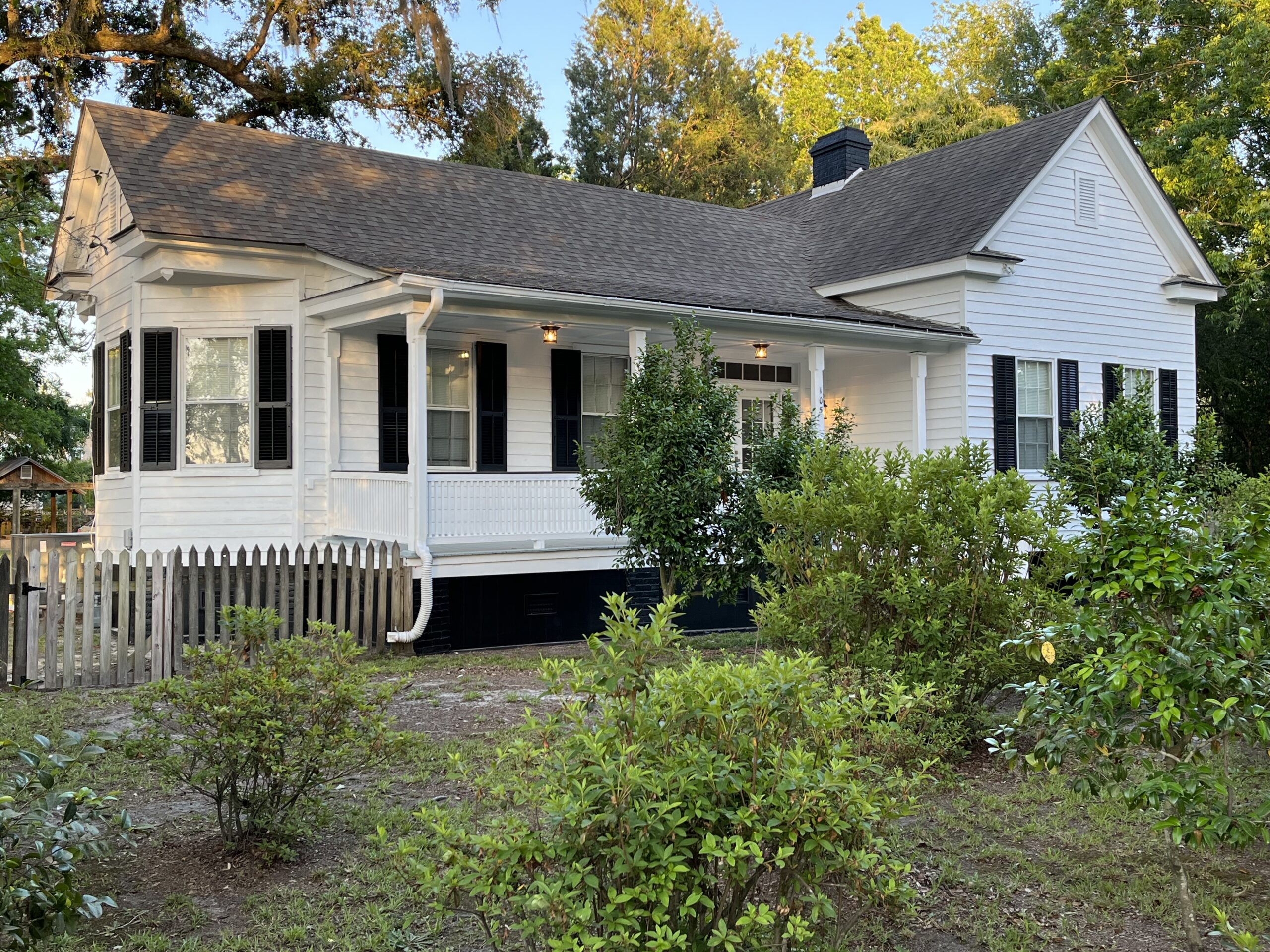
One of its most distinctive features is its lack of a traditional hallway. The living room sits at the center of the home, connecting the dining room, kitchen, two bedrooms, and sitting room. When you enter from the front porch, you step directly into the heart of the house.
The Farmhouse is understood to have once served as a boarding house. Each of the two bedrooms had an exterior entrance, allowing tenants to access their private quarters without passing through the rest of the home. Although I am still researching the details of this earlier use, the unusual layout offers a fascinating glimpse into how the house may once have functioned.
Even the dining kitchen holds a clue to its past. What is now an inviting gathering space was originally a porch, as suggested by its slanted ceiling and slight floor pitch. These details remind us that an old home is often a record of its own evolution, with each change reflecting the needs of the people who lived there.
My restoration continues that story. I have preserved the features that give The Farmhouse its character while incorporating thoughtful updates and modern comforts. The goal has never been to erase its age or make every room identical, but to honor what makes the house distinctive and prepare it to welcome a new generation.
Clues Preserved in Family Records
Some of the most fascinating details about The Farmhouse’s history come from old family papers and property records.
A will dated July 7, 1942, belonging to Maggie Jamison Limehouse refers to a portion of the family property as Parcel No. 3 and identifies it as the “Wolfe Place.” The associated property description also references “the Pond” and “the Lane.”
These names evoke a landscape where familiar places and landmarks helped identify different parts of the property. Their origins are not yet fully understood, but they offer valuable clues to the history of the land and the people who knew it.
The records also help establish that the property was connected to the family well before 1942. Other deeds and plats provide additional pieces of the puzzle, including references to land associated with family members and neighboring properties.
Family records indicate that a portion of the property was left to my great-uncle, Robert Limehouse, and that upon his death, the land passed to my grandfather, Harry Limehouse. This inheritance contributed to my family’s holdings in the area, which ultimately encompassed more than five acres.
I am continuing to trace these transfers through deeds, wills, and plats to better understand how the land was assembled and passed between generations. There are still gaps in the ownership history, but each record brings us a little closer to understanding The Farmhouse’s place within the larger family story.
The Homes That Connected Our Family
The Farmhouse was not the only historic home associated with my family in Stallsville. At 225 Stallsville Loop stands another important part of my family’s history: the home known affectionately as the Big House.
My great-grandparents, Orin Barnwell (O.B.) Limehouse and Margaret Jamison Limehouse, lived at the Big House, and generations of our family remained connected to that home and its surroundings. The two properties are distinct, each with its own history, but their stories overlap through the people who lived nearby, visited one another, and shared the rhythms of life in Stallsville.
My great-grandfather, O.B. Limehouse, served as Sheriff of Dorchester County for many years. Family records indicate that he died on September 27, 1945, and that Maggie received his estate. The family’s property interests were later divided among the children, and the records of those transfers continue to help us understand how the family’s land and homes were passed down.
A young couple, Jennifer and Chris Pelayo, now own the home at 225 Stallsville Loop. You are welcome to enjoy the paid activities they offer on their property, many of which require reservations. The animals in the pasture near the house belong to this wonderful young couple.
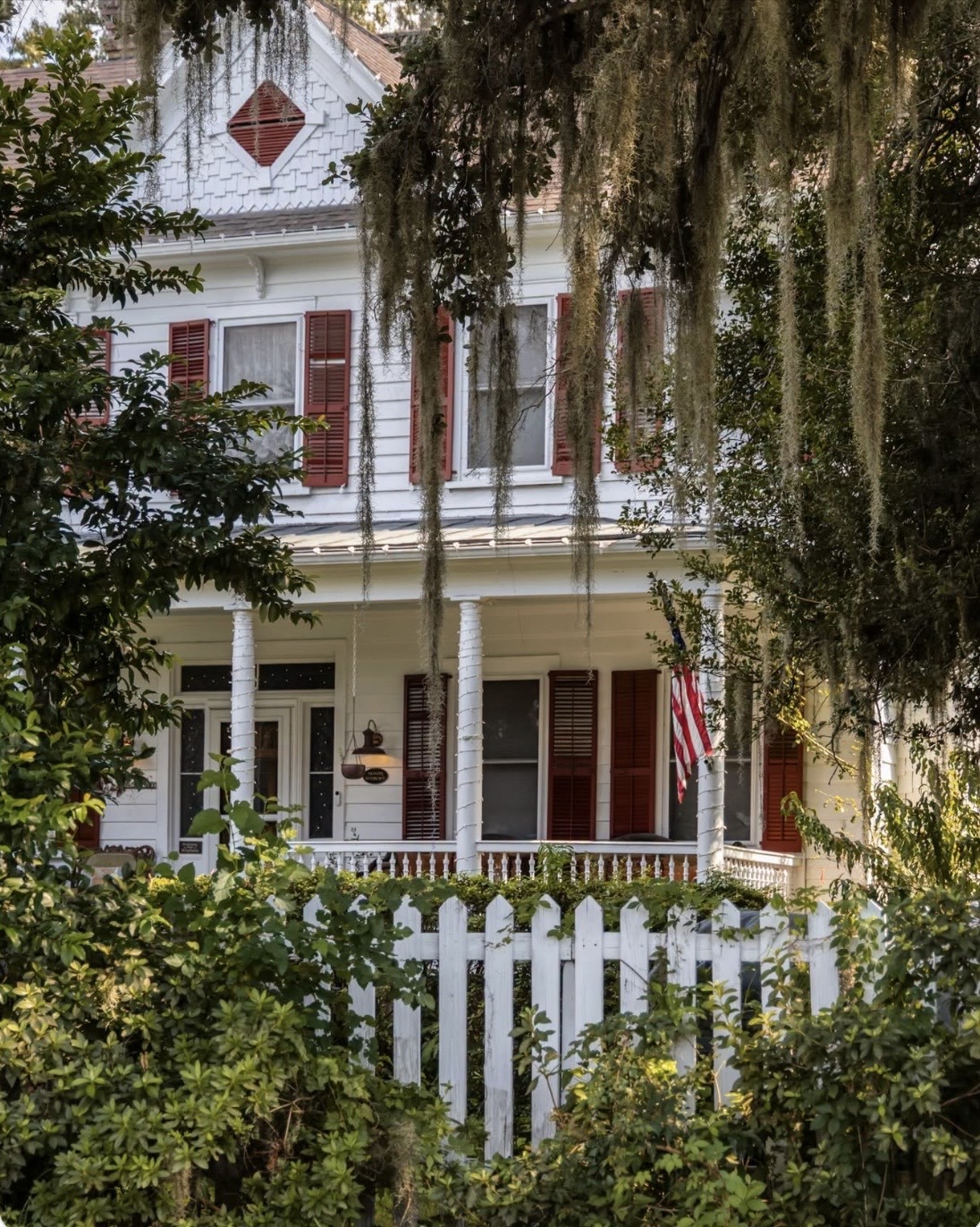
The connection between the two homes is not simply a matter of ownership. It is a story of a family whose lives were woven into the same community, whose homes were within walking distance of one another, and whose children and grandchildren grew up with family close at hand.
My mother, Katherine Grace Limehouse, was born at Summerville Infirmary on September 1, 1932, delivered by Dr. J. Carroll and Dr. E. Tupper. She was part of this family history from the very beginning, and her connection to Stallsville remained important throughout her life.
On March 1, 1958, my mother married my father, Alan Pierce Shewmaker, at Stallsville Methodist Church. Her aunt and uncle, Beulah and Walter Elliott, hosted the wedding reception at the Big House. It was another family milestone celebrated in the very place where generations had gathered before them.
These connections help tell a broader story of Stallsville, one that goes beyond the history of individual houses to celebrate the people whose lives linked them together.
Paths Through the Pastures
Some of my strongest memories of The Farmhouse and the surrounding properties are of the freedom to wander between family homes.
My brothers and I spent our summers here, from our toddler years through our teenage years. We returned over the years to spend time with our grandparents, aunts, uncles, and cousins who lived around the corner and throughout the Lowcountry.
We could walk through my grandfather Harry’s pasture, skirt the greenhouse built by my Uncle Walter, pass into my aunt and uncle’s backyard, and continue through the yard to visit our cousins. My cousin Kristy and I were inseparable, and the distance between our homes was measured by a walk through the pasture and two backyards rather than by a walk along the road.
Those paths were part of everyday life. They connected the homes of relatives and made the surrounding land feel like a natural extension of the family home itself.
The nearby greenhouse, the pastures, the yards, and the homes along the road formed a familiar landscape. They were places to visit, play, gather, and enjoy the simple pleasures of growing up surrounded by family.
Looking back, I realize how much those surroundings shaped my sense of home. The Farmhouse was never an isolated property; it was part of a network of family connections and shared experiences that made Stallsville such a special place.
A Mother's Wish and a New Chapter
The Farmhouse has been in my family since well before 1942, and my mother’s wish was that the property remain in our family. Honoring that wish has made its restoration especially meaningful to me.
For me, this is much more than an old house. It is a place filled with memories of summers spent with my brothers, time with my grandparents, and visits with the aunts, uncles, and cousins who helped shape our family life.
My grandparents valued traditions, while my parents encouraged education, exploration, and new experiences. Those influences have stayed with me, and I have brought them together in restoring The Farmhouse: honoring the past while creating a welcoming place where others can make memories of their own.
The house needed considerable tender loving care and thoughtful updating. The restoration has been an opportunity to preserve its character while making it comfortable for today’s guests. I have embraced its quirks, respected the details that give it personality, and added modern touches that allow the home to welcome visitors without losing the charm of an old farmhouse.
I hope guests will feel some of the warmth that has always made this place special. You do not have to be part of our family to appreciate a welcoming home, the pleasure of time together, or the sense of connection that comes from staying somewhere with a story to tell. And once you stay here, you become a small part of the community I call The Farmhouse.
A Story Still Being Discovered
There is still much to learn about The Farmhouse and the land surrounding it.
I continue to research old family papers, deeds, wills, plats, and genealogy records in the hope of discovering more about the property’s earliest owners, the origins of the names preserved in the 1942 records, and the sequence of ownership before the land became part of our family’s history.
I am also exploring the family’s earlier roots in England and Charleston, including stories of historic homes and places associated with the Limehouse name. Some of these connections are supported by genealogy records, while others remain family recollections that I hope to verify.
I may never uncover every detail, but the process has deepened my appreciation for the generations who lived here before me and for the relationships that connected them to this special place.
The Farmhouse has already lived many lives. It has changed with the years, adapted to the needs of those who lived here, and remained part of a family story that continues to unfold.
Today, it begins another chapter. By preserving the home and sharing its history, I hope to honor my mother’s wish, celebrate my family’s connection to Stallsville, and invite others to enjoy a little of the history, warmth, and charm of the Lowcountry.
Welcome to The Farmhouse. I am delighted to share this special place with you, and we hope you will become a small part of its continuing story.