
Stories
Story #1:
A Handshake, a Promise, and a Family Tradition
Times change. Owners change. Even the animals that call this property home change over the years. But some things are too meaningful to change.
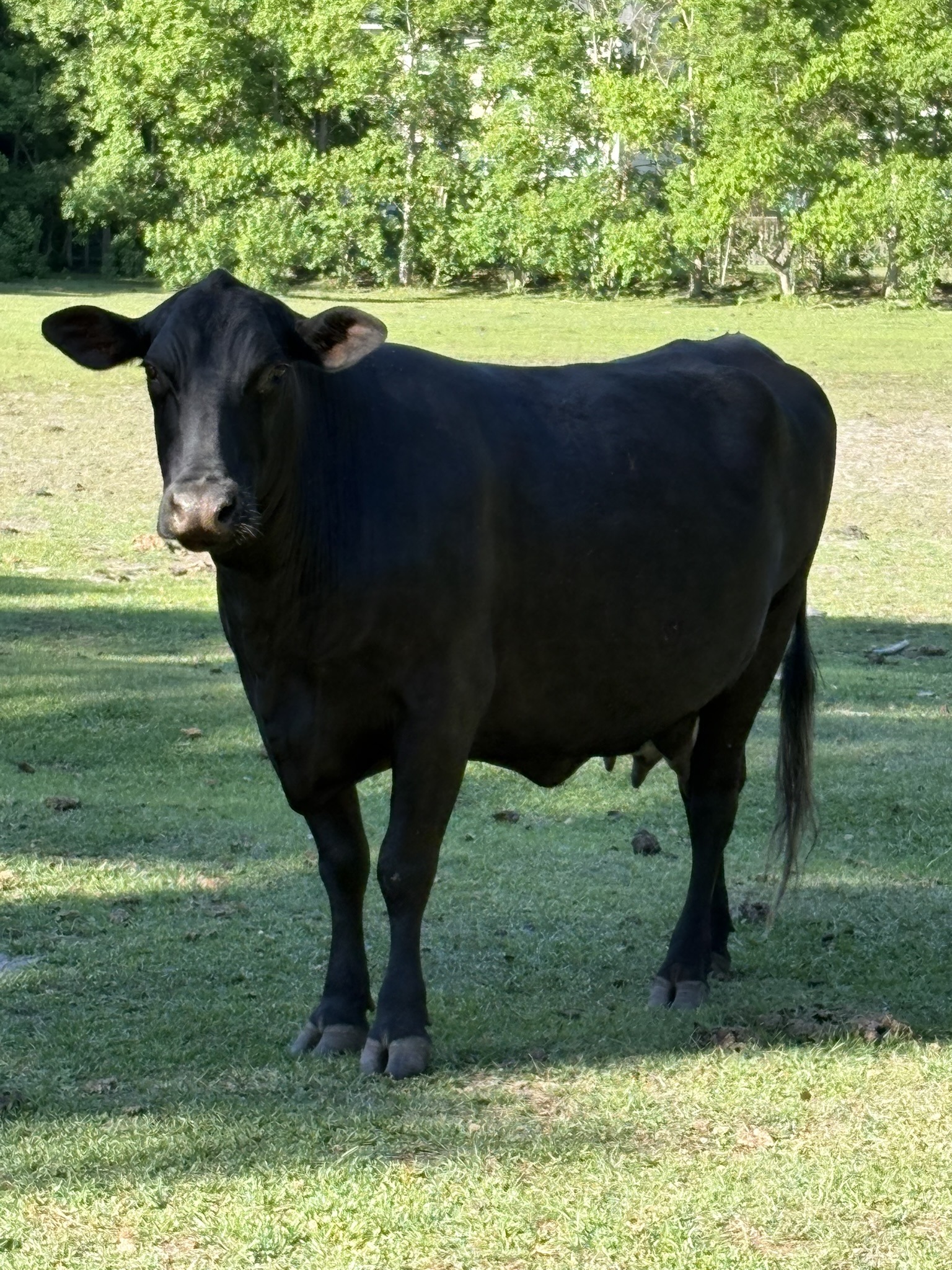
The Black Angus cows grazing on the property belong to a gentleman who continues an arrangement that began generations ago with a simple handshake between my grandfather and my cousin. In time, that same understanding was passed along to him, just as it had been honored before.
There is no elaborate contract or complicated agreement behind it, just a promise, a tradition, and the trust that comes from knowing someone’s word still means something.
I intend to honor that handshake agreement for the rest of my life. To me, it’s simple: this is what family and close friends do. They respect the promises made before them, look out for one another, and carry forward the traditions that matter.
And so, as The Farmhouse begins a new chapter, some things will remain just as they have been, not because they have to, but because they should.
Story #2:
Family by History, Neighbors by Choice
The Farmhouse has always been part of a larger story, one shaped not only by family, but also by the people and relationships that make this little corner of the Lowcountry so special.
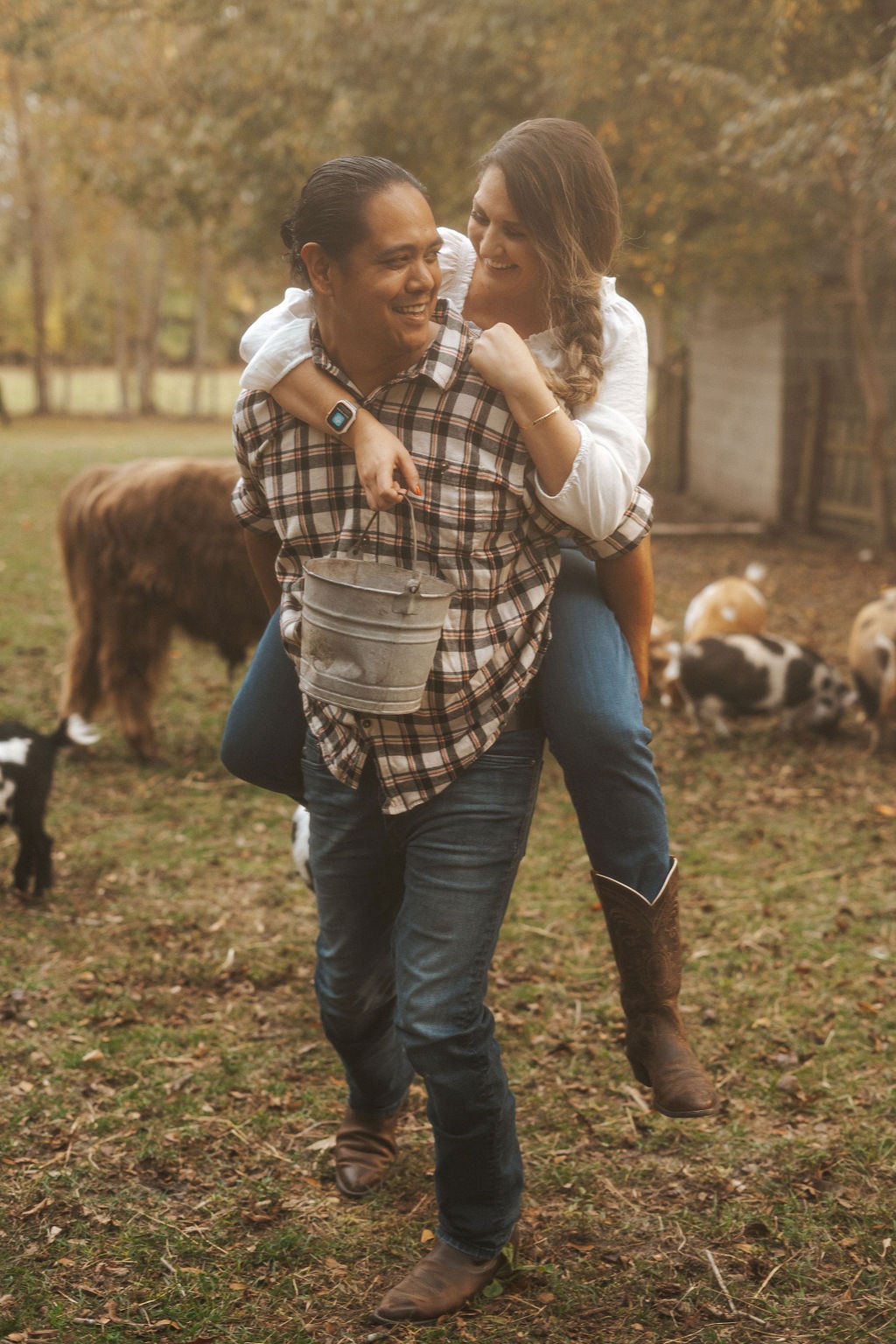
The goats, miniature cows, donkey, Tank the turtle, and the other animals grazing in the pasture around the house belong to a couple who live in the home where my great-grandparents once lived, along with other members of our family over the years.
While we aren’t related by blood, we share something just as meaningful: a connection to this special place and a willingness to look out for one another. We work together, lend a helping hand, and treat one another as family.
It’s a reminder that family isn’t always defined by a shared last name. Sometimes, it’s simply about the people who show up, care for one another, and make a place feel like home.
Story #3:
A House Without Halls: A Home That Evolved Over Time
One of the most distinctive things about The Farmhouse is what it doesn’t have: traditional hallways. Instead, the rooms connect through a central gathering room, creating a layout that reflects the home’s intriguing past.
The house was originally used as a boarding house, and its design offered a degree of privacy for those who lived here. When you enter from the front porch, you step directly into the living room at the heart of the home. From there, the dining kitchen, two bedrooms, and keeping parlor connect to one another. Each bedroom originally had its own exterior entrance, allowing tenants to come and go without disturbing the other occupants.
Even the dining kitchen holds a clue to the house’s earlier days. What is now an inviting gathering space was once a porch, as suggested by its slanted ceiling and the gentle pitch of the floor.
Look closely, and you’ll notice other hints of the home’s evolution. The rooflines, construction, moldings, trim work, and finishing details suggest that the house grew as needs changed, with additions incorporating the materials and craftsmanship available at the time. Rather than following a single, uniform design, the Farmhouse developed gradually, with each change becoming part of its character.
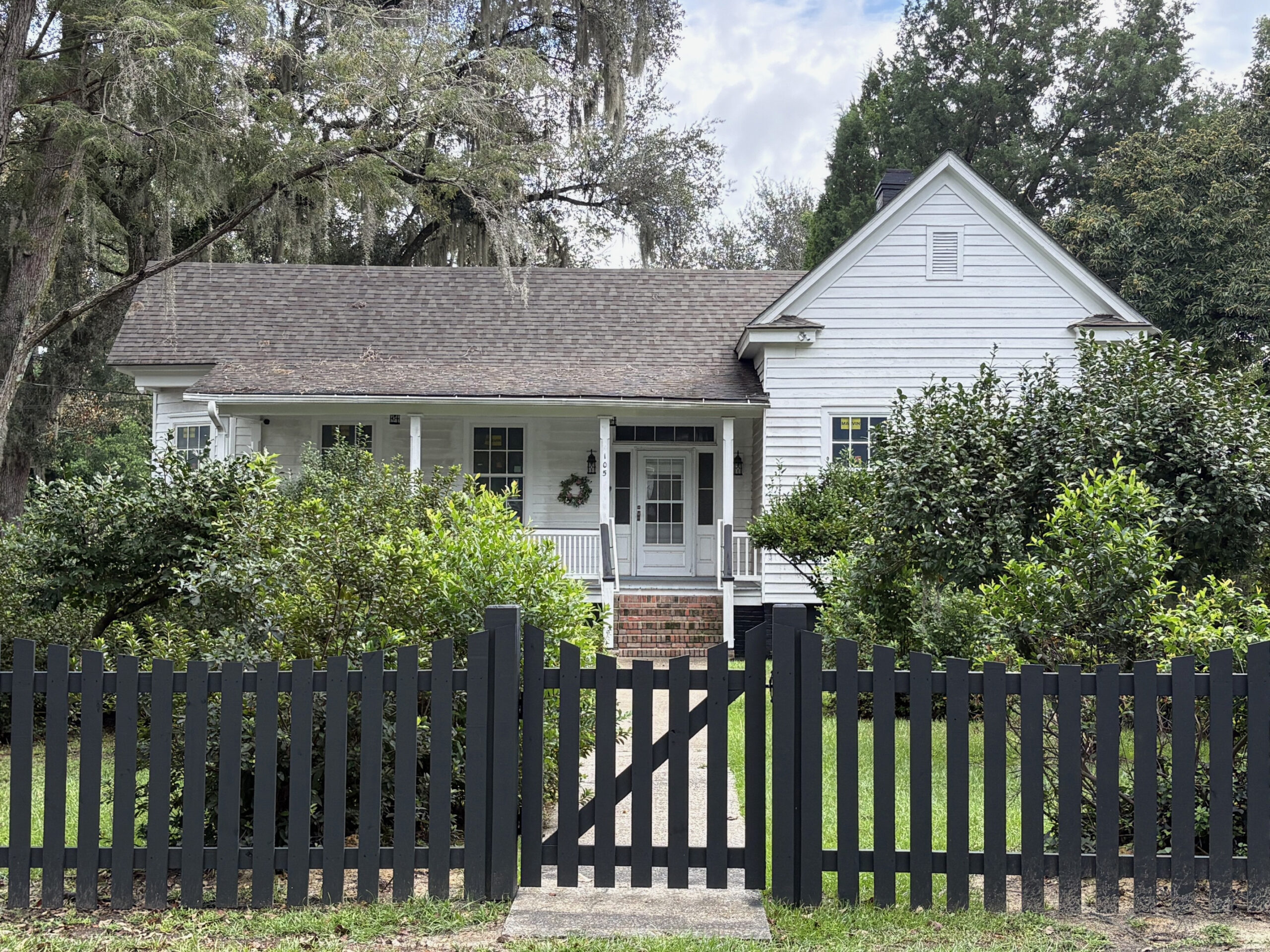
Our recent addition continues that story, drawing inspiration from the original home’s architectural details while incorporating modern touches for today’s guests.
You’ll notice that the two bedrooms share a similar style, while the other rooms have subtle differences that give each its own personality. These variations are part of the charm—a reminder that this is a home that evolved rather than one built all at once.
The Farmhouse’s quirks are part of its story. We have embraced them in the restoration, preserving the character of an old home while making it comfortable and welcoming for a new generation of visitors.
This is new material: 10/16/26, and it ties my great-grandparents’ story and my grandparents together.
Story #4:
The Big House
A wedding gift, a growing family, and generations of memories in Stallsville.
A Home Built for a Growing Family
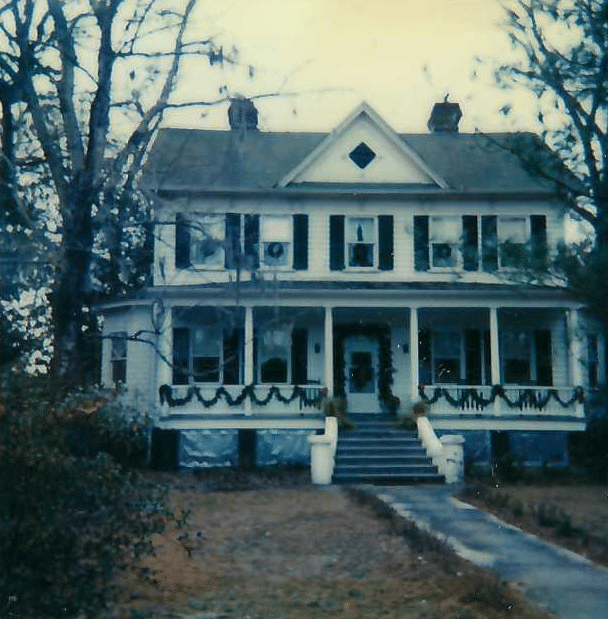
At the corner of Stallsville Loop and Limehouse Drive stands a historic home that has held a special place in our family’s history for generations. Known by various names over the years, including Oak Villa, the Jamison home, and the Limehouse home, it was affectionately called The Big House by our family.
My great-grandfather, Orin Barnwell Limehouse, known to us as Pap, purchased the home from his bride’s father, the Jamison family, as a wedding gift for his wife, Margaret Jamison Limehouse, whom we called Mema.
The house was originally one story, but Pap had a vision for the home he and Margaret would share. He added a second story, two bay windows at the front of the house, and a beautiful staircase with wide steps designed to make it easier for Margaret to carry their children upstairs and down. He was preparing a home for a growing family, hoping its rooms would one day be filled with the pitter-patter of little feet.
That hope became a reality. The Limehouse children were born at the Big House, according to family history, although I am still confirming the details surrounding Margaret, who did not live very long. The house became the setting for family life, from the earliest days of raising children to the visits and gatherings that would continue through the generations.
Story #5:
A Family That Pulled Together
The Big House became especially important during the Great Depression, when work was scarce, and families struggled to make ends meet.
As our family understands it, the Limehouses faced the possibility of losing the house because of the loan on the property. Their adult children returned to live there with their spouses to help keep the household afloat. Beulah, Thelma, Harry, and Robert Limehouse came together during those difficult years, and when their own children were part of their growing families, they lived there too.
Several generations shared the home during a time of uncertainty. It was a practical response to difficult circumstances, but it also speaks to something enduring about the family: when times were hard, they came together to help one another.
The Big House was more than a family residence. It became a place where the responsibility of keeping a home and family together was shared across generations.
Story #6:
Pap, Mema, Ginga, and Meme
The Big House was filled with people, personalities, and the affectionate names that made family life uniquely ours.
My great-grandfather, O.B. Limehouse, was Pap, and my great-grandmother, Margaret, was Mema. Their daughter Thelma, my grandmother, was known as Ginga. Beulah Limehouse Elliott, another of their daughters, was affectionately called Meme.
My cousin Buddy Elliott, son of Walter and Beulah Elliott, is remembered for giving the adults these familiar names. They became part of our family’s shared language, carrying through gatherings and memories long after the years when everyone lived under one roof.
These names bring the history to life. Behind the historic façade and beautiful staircase were real people with their own personalities, humor, relationships, and stories. The Big House was not simply a property passed down through generations; it was a place where generations lived together and created memories that would continue to be shared.
Ginga never married. She was engaged three times, but each relationship ended tragically when her fiancé died through illness or other circumstances. After the third loss, she chose not to marry. Instead, she devoted herself to her education and became a high school teacher in High Point, North Carolina. Her story is one of the many individual lives that make our family’s history more than a list of names and dates.
Story #7:
Water, Gardens, and Everyday Life
The Big House had its own practical systems and routines. The property was supplied by well water and a pump house, and a water tower stood on the property until Hurricane Hugo brought it down in 1989.
By that time, the house had been plumbed with city water. Beulah continued to use the well water to tend her flowers in the greenhouse, or hothouse, built by my Uncle Walter. The greenhouse was another part of the landscape that reflected the work, care, and everyday activities of family life.
One of my favorite memories is of walking through my grandfather Harry’s pasture, passing the greenhouse, and continuing into Meme’s backyard before making our way through the neighboring yards to visit our cousins. The houses were connected not only by family ties but also by the paths we walked between them.
The Big House and the surrounding properties formed a familiar world in which relatives lived close enough to visit without making a special trip. It was a childhood shaped by the freedom to move between family homes, gardens, pastures, and backyards.
Story #8:
A Sleeping Porch and Summer Traditions
One of the places that remains especially vivid in my memory is the second-floor sleeping porch. Throughout our lives, we spent many nights there, enjoying a part of the house that belonged to the rhythms of Southern summers.
Meme would slice apples and lay them out to dry on the floor of the sleeping porch during the summer. It is a small detail, but those are often the memories that make a place feel alive: familiar routines, the work of the season, and the everyday activities that became part of family life.
The bay windows, staircase, sleeping porch, greenhouse, and water tower all tell parts of the home’s story. But it is the people who used those spaces, cared for the house, and gathered there who give them their meaning.
Story #9:
A Doctor’s Kindness in a Time of Grief
One of the family’s most poignant stories concerns Dr. Way, the physician who cared for Pap and Mema.
Our cousin Buddy Elliott served in the Korean War and died after his medical unit was bombed. Family recollection holds that members of the unit were attempting to escape into the hills when they were struck and killed. I hope to learn more about the circumstances of his death as I continue researching our family’s history.
Dr. Way was so moved by Pap and Mema’s grief that, according to family memory, he never charged them for his medical services after Buddy’s death. It was a quiet act of compassion from a physician who understood the weight of their loss.
That gesture has remained part of our family’s story—not because it was grand or public, but because it was personal. It is a reminder that a community’s history is also made by the kindness people show one another during the hardest times.
Story #10:
A Wedding Reception at the Big House
The Big House continued to be a gathering place for the family long after Pap and Mema’s children had grown.
On March 1, 1958, my parents, Grace Shewmaker and Alan Pierce Shewmaker, were married at Stallsville Methodist Church. Beulah and Walter Elliott hosted their wedding reception at the Big House, bringing family and friends together to celebrate the beginning of their life as a married couple.
I love that this home was part of such an important family milestone. The same house that Pap had enlarged in anticipation of a growing family later welcomed another generation to celebrate a new marriage. Its story continued through the lives of the children and grandchildren who gathered there.
My mother’s own arrival into the world took place at Summerville Infirmary on September 1, 1932. Katherine Grace Limehouse was delivered by Dr. J. Carroll and Dr. E. Tupper. Although she was not born at the Big House, her life and family story were deeply connected to the home and the people who lived there.
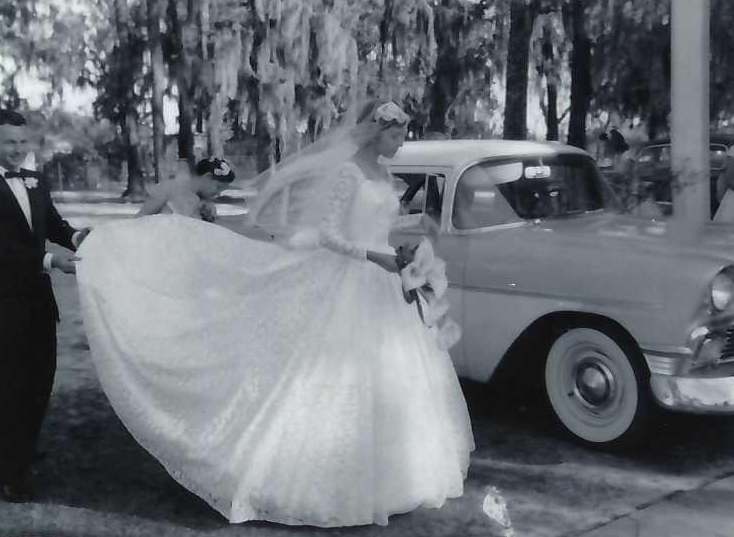
These details help place the house within a larger family timeline: a home built for a young couple, a gathering place for children and grandchildren, and a setting for celebrations that continued into the next generation.
Story #11:
A Family’s History in Stallsville
The Big House did not stand alone. The Limehouses, Jamisons, Murrays, Stalls, Sims, and other families lived in the surrounding community, and their lives were closely connected. People married within the community, raised children nearby, and built relationships that lasted across generations.
Pap served as Sheriff of Dorchester County for many years. He died on September 27, 1945, and family records indicate that Mema received his estate. After her death, the family’s property interests were distributed among their children, with arrangements that allowed Ginga to remain in the Big House as long as she wished, provided she did not marry. I am continuing to check the original documents to establish the exact terms of these arrangements.
A deed identified as No. 5293 and a plat dated October 15, 1979, provide further clues about the property and the land associated with Beulah. The plat also identifies nearby land belonging to Walter H. Elliott Jr. These records are helping us understand how the property was divided and how ownership changed over time.
There is more to learn about the family’s earlier roots as well. Family accounts connect the Limehouses to England and the Charleston area, including a historic house on Limehouse Street and a church in England that once bore the family name. I am continuing to research these connections, along with the possibility of an earlier land grant.
The Big House and the Farmhouse at 105 Limehouse Drive are separate properties, each with its own history. Together, they reflect our family’s long connection to Stallsville and the many generations whose lives unfolded in this community.
Story #12:
A Legacy That Lives On
The Big House holds more than architectural history. It carries memories of a wedding gift, a growing family, the hardships of the Depression, the kindness of a physician, the work of tending a greenhouse, the comfort of a sleeping porch, and the paths we walked between the homes of relatives.
For me, it is also a reminder of how closely the families of Stallsville were connected. Growing up, my cousin Kristy and I were inseparable, and the distance between our homes was measured by a walk through the pasture and backyards rather than by a road trip or a phone call.
These memories are part of why preserving our family’s history matters to me. The Big House represents generations of love, sacrifice, celebration, and resilience. Its story continues through the people who remember it, the documents that help us understand it, and the family traditions that have endured.
As I continue looking through old papers and uncovering new details, I hope to preserve more of this history for future generations. There is still more to discover, but what we already know tells a remarkable story of family and community in Stallsville.
The Big House was built for a growing family, sustained through difficult times by people who stood together, and cherished by generations who called it home. Its legacy lives on in the memories we carry and the stories we continue to share.
The following stories are a collection of snippets from a letter my mother wrote to her cousin, Bubba Elliott.
Story #13:
Brother and Sister by Choice
A memory from Katherine Grace Limehouse
I found a letter my mother, Katherine Grace, had written to her cousin Walter Jr., affectionately known as Bubba. In it, she reminisced about growing up at Oak Villa, the Big House. Even after I moved to the Wolfe Place at 105 Limehouse Drive, I spent most of my time at the Big House with Bubba. They had so much fun growing up together, and this story captures one of those memories in my mother’s own words.
“I remember riding around with Pap around the state whenever we could. We loved it when he would turn on the siren near some poor soul walking along the highway. It didn’t take much to keep us entertained and happy.
Then one day, Pap took us on one of the famous rides, and we met someone who told us something very disturbing. It seems, after all of these years, believing that we were brother and sister, just living in different houses but right around the corner, that there was NO way we could be brother and sister.
We were heartbroken. The person explained that we had different last names and because of that, there was no way we were brother and sister.
When we got home, we ran and asked Meme (Beulah) and Daddy (Harry). They both calmly explained that that was true; we weren’t brother and sister, but what they did say made all of the difference in the world.
They told us we could be brother and sister if we wished, and they were right! We were the best brother and sister ever!”
— Katherine Grace Limehouse
Story #14:
The Old Pontiac and Our Favorite Swimming Hole
There is a scanned picture of a lady and man in an old car. That picture needs to go with this story. Under the picture, it should say. 1928 Pontiac Roadster, Circa 1972
A memory from Katherine Grace Limehouse to her cousin, Bubba
Do you remember swimming at Dorchester Creek? Daddy would let you drive the old Pontiac. You could really crank that car, and then we would “speed” along to our favorite swimming hole. We always had to take a gallon of water for the radiator so we could get home without it overheating.
— Katherine Grace Limehouse
Decades after those long summer days, my grandfather, Harry, would take my brothers and me to that same creek to swim. The water was tidal, and my grandmother was always careful to make sure we never went during high tide because it was too dangerous.
Story #15:
Cold Pork and Beans, and an Uninvited Guest
A memory from Katherine Grace Limehouse to her cousin, Bubba.
Do you remember boating on the Ashley River with Mema (Maggie Limehouse) and sneaking onto the dock at Middleton Gardens to eat our gourmet lunch of cold pork and beans?
Don’t forget the time a snake tried to join our fun by trying to get into the boat. We kept pushing the snake away with the oar, and we won the game!
— Katherine Grace Limehouse
Story #16:
The Best-Dressed School Girl
A memory from Katherine Grace Limehouse to her cousin, Bubba
Do you remember our many trips to Kerrison’s and the Band Box for my school clothes? Meme, Mother, and Ginga made me try on all kinds of things, and when you disapproved, I definitely didn’t take that outfit home.
I’m not sure to this day why you didn’t like some of the outfits, but your opinion really mattered to me, and I truly valued it. And better yet, I was one of the best-dressed schoolgirls around—thanks to you!
— Katherine Grace Limehouse
Story #17:
Hi, Mom. It’s Good to See You.
A memory from Katherine Grace Limehouse to her cousin, Bubba
Do you remember dipping for tadpoles in the pasture? One day, we were in the pasture and saw this orange-looking thing in the water. You scooped it up, and to our surprise, it was a little painted turtle.
Someone had painted its shell yellow and written the name Zeke on its back!
That was the beginning of my love for turtles and frogs. We both passed this tradition of searching for tadpoles in the “pond” on to our children.
— Katherine Grace Limehouse
To this day, I’m sure there are tadpoles in the pond during the summer, and those tiny little green frogs remind me of my mother. In fact, when I see one stuck to the front door transom, I know it’s Mom watching over me, and I simply say, “Hi, Mom. It’s good to see you.”
And each time I see a little green frog at The Farmhouse, a big smile comes across my face. Then little tears well up in my eyes because I miss her so much.
— Karen Shewmaker Latta (aka The Whimsical Great-Granddaughter)
More stories to come…